Hai Van Pass Motorbike Tour
Cycling Guide

Hai Van Pass Bike Ride

The pass rises to roughly 500 metres above the South China Sea on a road with no tunnel shortcut for bicycles. Riders arrive expecting a barrier, a booth or a permit, and find none of them. This guide sets out what a self-powered crossing costs, when the road is legally open, and the daylight window that governs a safe attempt.

12 min read Updated 2026-08-07 Fact-checked
Hai Van Pass Bike Ride

Quick answer

A hai van pass bike ride costs 0 VND — it is free to ride the mountain pass — and the road on National Route 1A is open 00:00–23:59, seven days a week. There is no ticket, gate or registration. The practical constraint is light, not access: the recommended arrival window is 06:00–17:00, for visibility and to avoid mountain mist or darkness.

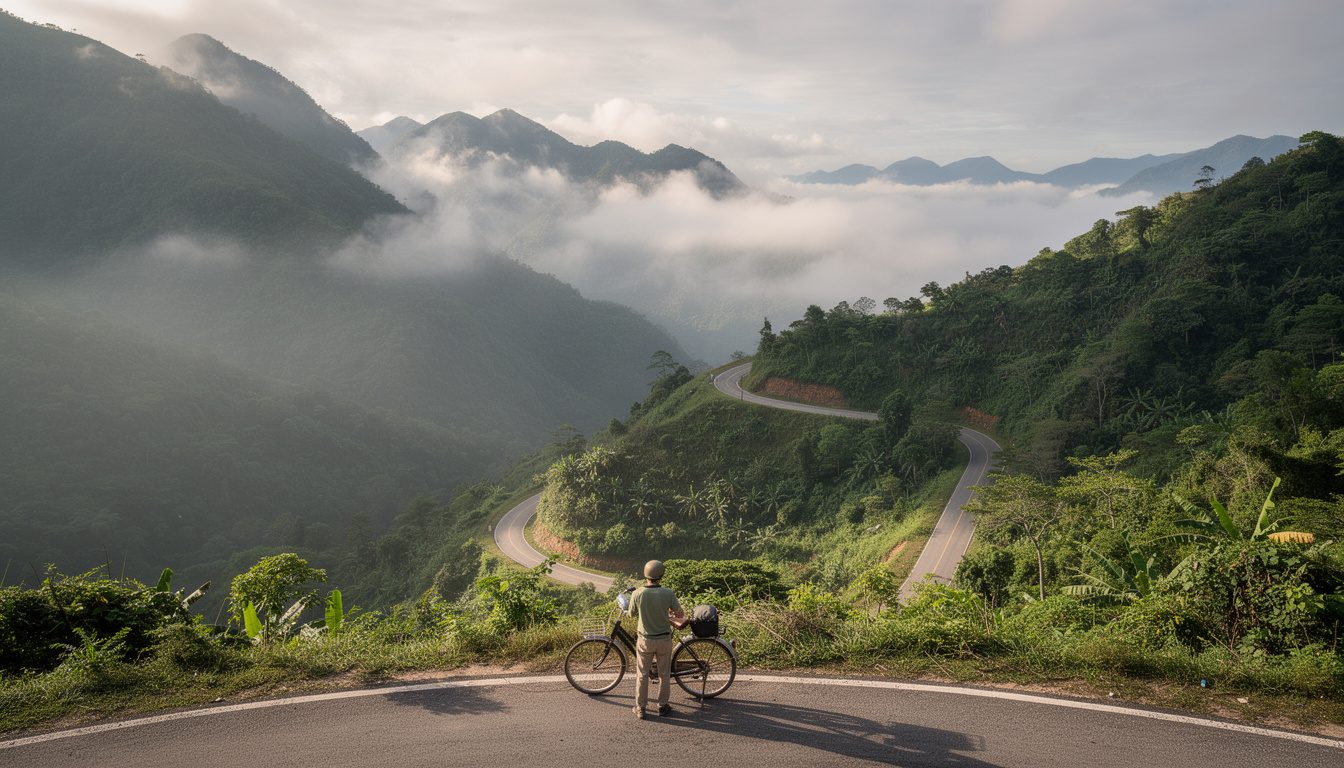
Since the Hai Van Tunnel opened beneath the mountain, most through-traffic vanished from the old road above it — which is precisely why the climb has become a cyclist's route rather than a freight corridor. Motorbikes and tour vehicles still use it, but the density is a fraction of what National Route 1A carries at sea level. The pass itself is a spur of the Trường Sơn range dropping straight into the water, and the tarmac wraps around it in a series of stacked switchbacks. A hai van pass bike ride is, in the plainest terms, unregulated. The entrance fee is 0 VND and the road is open 00:00–23:59 every day of the week, which means no operator controls who rides it or when. That freedom shifts the entire burden of planning onto the rider. There is no gatekeeper to turn back an underprepared cyclist at the foot of the climb, and no closing time to force anyone off the mountain before dark. The 06:00–17:00 arrival guidance exists for exactly this reason: daylight hours give visibility on unlit hairpins and keep riders clear of the mist that settles over the summit. The physical reality is a sustained ascent of roughly twenty kilometres of climbing spread across both flanks, with gradients that sit in the mid single digits and steepen through the upper bends. Cycling Hai Van Pass on an unassisted bicycle is a half-day undertaking for a fit rider, longer with stops. Touring cyclists on loaded frames should assume considerably more. Water is the recurring problem — roadside cafés cluster near the summit and thin out badly on the approaches, so bottles are filled at the base, not en route. Anyone planning a Hai Van Pass cycling trip should treat the free, always-open status as an invitation to plan carefully rather than casually. The address for the northern approach is National Route 1A, Hoa Hiep Bac, Lien Chieu, Da Nang. Beyond that, the useful decisions concern timing, equipment and route direction, each of which this guide addresses in its dedicated sections below.

“There is no gatekeeper to turn back an underprepared cyclist at the foot of the climb, and no closing time to force anyone off the mountain before dark.”
Head to head

South vs North Climb — Which Side for Your Hai Van Pass Bike Ride?

Cyclists tackling the Hai Van Pass must choose between climbing the south side from Da Nang or the north side from Lang Co. Each direction presents a distinct physical profile, road surface quality, and scenery for manual bicycle riders.

South Climb Da Nang Side Recommended North Climb Lang Co Side
Starting Location Lien Chieu District, Da Nang Lang Co Town, Thua Thien Hue
Climb Distance 9.1 km 9.6 km
Average Gradient 5.4% 4.9%
Road Conditions Smooth asphalt with wide sweeping bends Asphalt with rougher sections and a railway crossing
Traffic Volume Moderate mix of local motorbikes and support vans Lower volume but includes occasional fuel and livestock trucks
Key Views Da Nang Bay and Son Tra Peninsula Lang Co Lagoon and coastal railway lines

Verdict: Choose the South Climb for a smoother road surface and wide ocean bay views, or opt for the North Climb if you prefer a quieter ascent with views of the lagoon and railway.

Directions

How to Reach the Base for a Hai Van Pass Bike Ride

The Hai Van Pass sits along National Route 1A, Hoa Hiep Bac, Lien Chieu, Da Nang, Vietnam. Accessing the south climbing base is most efficient by cycling along the coast from Da Nang or booking a private support van from Hoi An.

Taxi 30 min 400,000 VND

Private taxi van from Da Nang City Center via Nguyen Tat Thanh to the south base

Car 1 hr 10 min

Private support vehicle from Hoi An via Lac Long Quan and National Route 1A

Train 1 hr 20 min 150,000 VND

Vietnam Railways from Da Nang Station to Lang Co Station with bicycle cargo

On foot 20 min

Cycling from Xuan Thieu Beach along National Route 1A directly to the south base

Accessing the pass is free with an entrance fee of 0 VND. Plan your arrival at the base between 06:00 and 17:00 to complete the climb during daylight hours with maximum visibility.

Timing

Optimal Seasons and Hours for a Hai Van Pass Bike Ride

To tackle the manual climb comfortably, the optimal window is the dry spring season from February to May, specifically departing between 06:00 and 08:00. This avoids both the scorching midday heat and heavy afternoon mist.

Spring (February to May)

Moderate bike traffic, few tourist vans

Dry, sunny days averaging 22°C to 28°C

This is the prime season for manual cycling. Clear skies provide excellent visibility and the sea breeze keeps the steep climbs manageable.

Summer (June to August)

High vehicle traffic midday

Hot and humid, peaking at 35°C

Early morning departures are essential to escape the intense heat of the day. The pass is dry, but the physical demand increases significantly after 09:00.

Wet Season (September to December)

Minimal cyclists, occasional trucks

Frequent heavy rains, 20°C to 25°C

Heavy rains and risk of typhoons make manual cycling hazardous during these months. Road surfaces become slick, and thick fog frequently blankets the summit.

Weekday mornings (06:00–09:00)

Very low traffic, quiet roads

This daily window is ideal for cyclists seeking cooler air and empty roads. You avoid the tour buses and motorbikes that arrive later in the day.

Verdict: Tuesday to Thursday, arriving between 06:00 and 08:00, from March to May.

What to see

Scenic Landmarks to See on a Hai Van Pass Bike Ride

A bicycle ride up the Hai Van Pass features distinct natural and historic landmarks along the 21-kilometer route. Cyclists can pace their climb using these key stopping points to rest, capture the scenery, and explore the area's history.

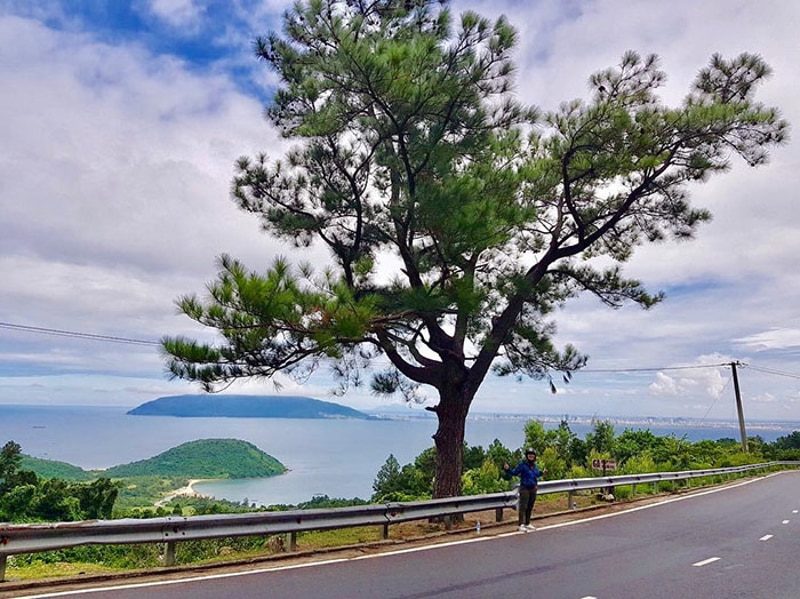
Lonely Pine Tree

Lonely Pine Tree

Standing on the edge of the southern ascent at kilometer 5.8, this solitary pine tree serves as a popular rest point. The adjacent wooden viewing deck offers a clear overlook of the coastline and the winding road below.

Visit after 06:00 to catch the clear morning light.
Crab's Elbow

Crab's Elbow

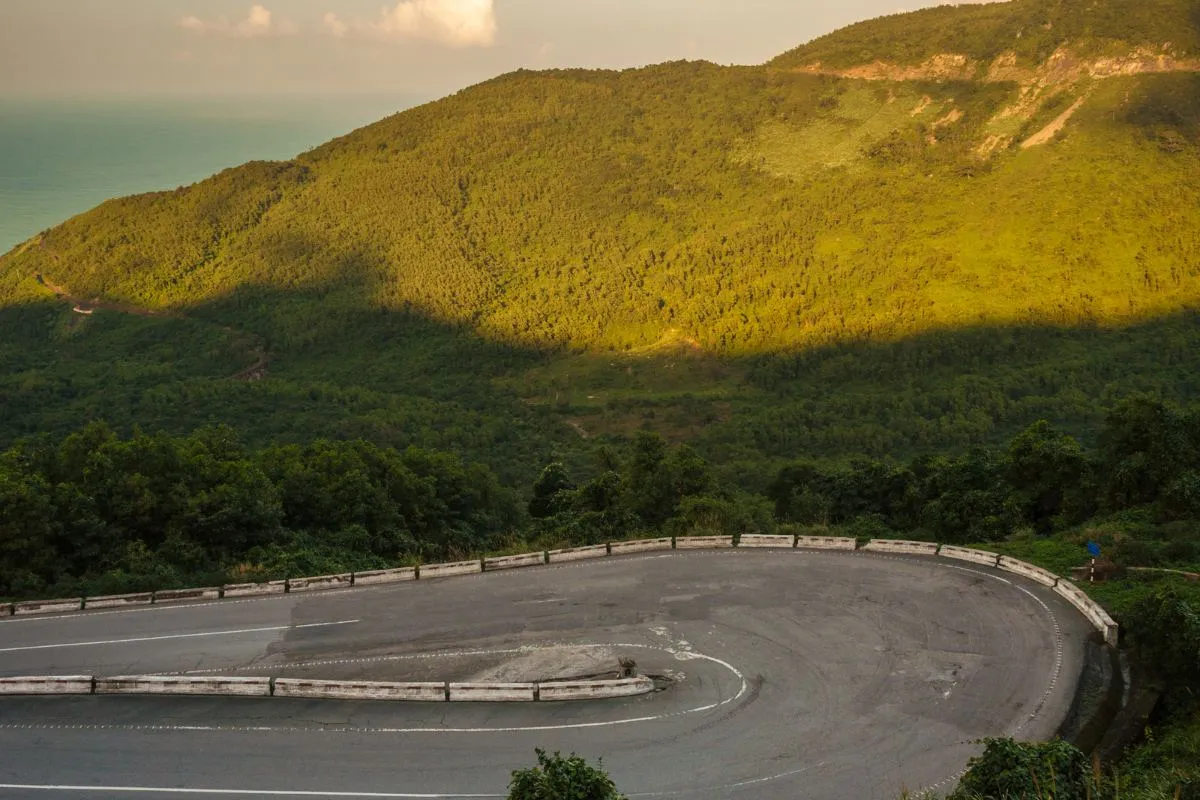
Locally known as Cua Cui Cho, this sharp hairpin turn near the summit features a steep 10 to 14 percent gradient. It serves as the final physical challenge of the southern climb, yielding wide vistas of Da Nang Bay.

Look back from the inner curve to photograph riders climbing.

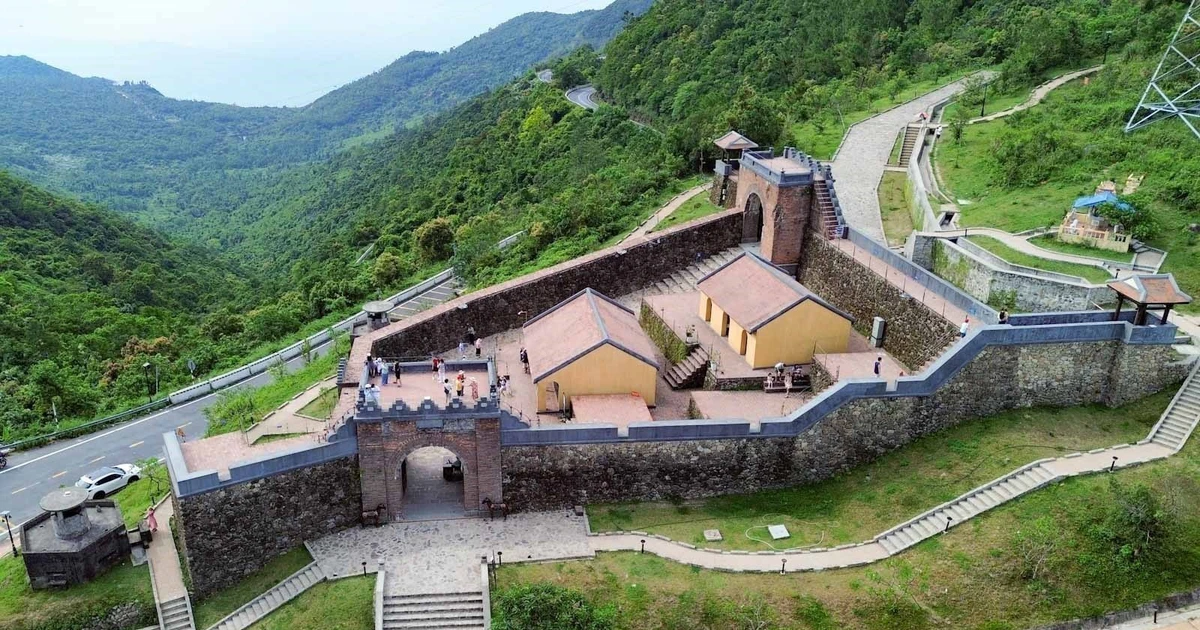
Hai Van Gate

Hai Van Gate

Situated at the 490-meter summit, this historic brick fortification was built in 1826 during the Nguyen Dynasty. It marks the border between Da Nang and Thua Thien Hue, presenting stone ramparts and old military bunkers.

Explore between 06:00 and 17:00 for the safest daylight visibility.

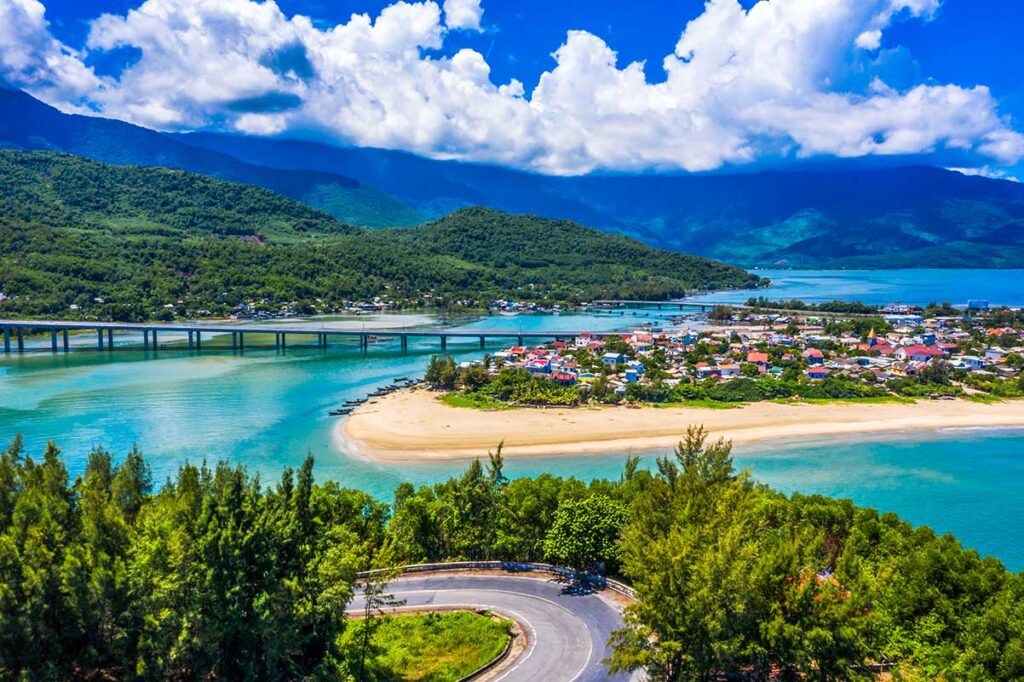
Lang Co Viewpoint

Lang Co Viewpoint

Positioned on the northern descent, this overlook offers a panorama of the crescent-shaped Lang Co Beach and Lap An Lagoon. The sight highlights the contrast between the green mountains and the marine bay below.

Stop on the northern shoulder before 17:00 for optimal lighting.

Insider tips

Essential Cycling Tips for Riding the Ocean Cloud Pass

Successfully ascending the pass on a manual bicycle requires careful mechanical preparation and structured pacing.

1

Check brake pads beforehand

Ensure your bicycle's disc or rim brakes have at least 3mm of pad wear left. The continuous 11-kilometer descent generates intense friction heat, which rapidly degrades worn pads.

2

Use compact gear ratios

Opt for a road or gravel bike with a 34T chainring and at least a 32T rear cassette. The climb features sustained gradients of 7% to 10%, requiring easy gears to maintain a steady cadence.

3

Plan hydration stops strategically

Carry at least two 750ml water bottles and replenish them at roadside stalls before the steep upper sections. There are no vending machines on the pass, and the high humidity increases fluid loss.

4

Maintain a steady climbing cadence

Keep your cadence between 70 and 80 RPM during the early kilometers to prevent premature fatigue. Pushing heavy gears early will lead to muscle cramping before reaching the summit.

5

Optimize your tire pressure

Lower your tire pressure by 5 to 10 PSI below the maximum limit to improve grip on the hairpins. This increases contact with the pavement, especially if you encounter damp patches or loose gravel.

6

Select a road-focused bicycle

Rent a drop-bar road bike or a fast hybrid with slick tires rather than a heavy mountain bike. The entire route is fully paved asphalt, making a lighter setup much more efficient.

Avoid these

Critical Pitfalls to Avoid on a Hai Van Pass Cycling Ascent

Most cycling problems on Hai Van Pass come from the descent and from bikes that were never checked before the climb. These are the errors that most often turn a manageable ride into an incident.

Descending at full speed on the switchbacks

Brake before each corner, not during it, and keep speed low enough to stop within the visible road ahead. Buses and trucks cut wide on the hairpins, so hold your line near the shoulder.

Riding on through thick mountain mist

Stop and wait at a pull-off until the cloud clears rather than continuing blind. Vehicles cannot see a cyclist in mist, and the pass is free to ride with no closing time, so there is no pressure to push on.

Accepting a rental bicycle without testing the brakes

Ride the bike 100 metres before leaving the shop and confirm both brakes lock the wheel. Reject any bike with slack cables, worn pads or a slipping chain.

Carrying one small bottle for the whole climb

Carry at least two litres and refill at the roadside stalls near the summit. The ascent is exposed and sustained, and dehydration is the common reason riders stall midway.

Starting the ride late in the afternoon

Arrive between 06:00 and 17:00 so the full climb and descent fall in daylight. Riding down after dark on unlit switchbacks is the single riskiest choice on the pass.

Braking continuously with one hand on the way down

Alternate front and rear braking and pause at a pull-off every few kilometres. Continuous braking overheats rims and rear pads, which is how brake failure happens on a long descent.

Checklist

Pre-Ride Checklist for Cycling the Hai Van Pass

Work through this list in order — the bike checks days ahead, the packing the night before, the water and daylight timing on the morning you ride.

Book

Check availability

Frequently asked

Frequently asked questions about hai van pass bike ride

Everything you need to know about hai van pass bike ride

Is there an entry fee to cycle over the mountain pass?

No, the entrance fee is 0 VND, making it entirely free to ride the mountain pass. You can access the public highway at any time without buying a ticket.

How difficult is a manual bicycle ride over Hai Van?

The journey is moderately challenging for active riders, requiring steady endurance for the climb. You will climb several hundred meters while navigating the winding switchbacks, which requires a reasonable level of physical fitness.

What kind of bicycle is recommended for Đèo Hải Vân cycling?

For a hai van pass bike ride, a high-quality touring bicycle or mountain bike with a wide range of gears is highly recommended. Having reliable brakes and lower gear ratios makes ascending and descending much more manageable.

Are there support options available for this Vietnam coastal route?

Many cyclists choose to book an organized tour that includes a support vehicle to carry luggage and provide assistance. If you cycle independently from Da Nang to the fishing village of Lang Co, you will need to carry your own gear or arrange a separate transfer service.

Can I rent a manual bicycle in Da Nang or Hue?

Yes, you can easily secure a rental bike in nearby cities to attempt your own hai van pass bike ride. Local shops offer various hybrid and mountain bikes, and some can even arrange to drop your luggage at your final destination.

What is the average gradient of the climb?

The climb features an average gradient of about 5% over a distance of roughly 9 kilometers on either side. The road reaches the summit at 496 meters above sea level before descending toward the coast.

Where is the start of the pass located?

The mountain pass is located along National Route 1A, Hoa Hiep Bac, Lien Chieu, Da Nang, Vietnam. It serves as the geographic boundary between Da Nang and Thua Thien Hue province.

What are the opening hours for crossing the pass?

The pass is open 24 hours a day, Monday through Sunday (00:00–23:59). Although the pass itself remains open all day, you should coordinate your hai van pass bike ride during daylight hours for safety.

Keep reading

More guides & pages